A major development project can sound like good news for nearby homeowners. The harder question is what that project means for a home today, while the work is still happening.
Announcements create expectations. Construction brings a different experience: traffic changes, noise, detours and uncertainty about when the finished project will actually arrive. Even after construction ends, it can take additional years for surrounding businesses, housing and amenities to develop.
Denver has examples at several points along that timeline.
Union Station represents a completed redevelopment. East Colfax is still under construction. Sterling Ranch is a growing community where new homes and amenities continue to arrive.
Looking at them together gives homeowners a better way to evaluate development near a property.
Union Station Shows What Can Happen After the Investment Is Complete
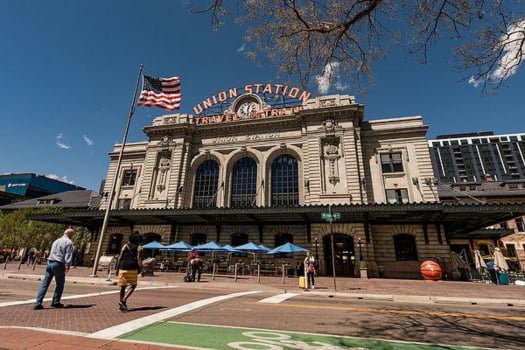
I remember Union Station before the redevelopment.
It was primarily a place to catch a train. There wasn't much around it that made you want to spend an afternoon there.
Today, the experience is completely different. Restaurants, hotels, apartments, offices and retail surround the historic station.
That transformation took years.
The Union Station redevelopment involved roughly $500 million in public investment, and the renovated station reopened in 2014. Since then, RTD estimates nearly $3.5 billion in private development has occurred around the station, including residential, office, retail and hotel projects.
Investment continued after the original redevelopment. The Crawford Hotel and station received additional renovations in 2024, while the reconstruction of 16th Street was completed in 2025.
Housing activity has continued as well. 5280's 2026 neighborhood ranking reported an average 2025 sale price of $816,768 in Union Station, up nearly 8% from the previous year.
That doesn't mean Union Station's redevelopment caused that increase. Home prices also respond to interest rates, inventory, property type, demand and other neighborhood changes.
The more useful point is what happened over time.
First came the major infrastructure investment. Then came additional housing, restaurants, offices, hotels and public improvements around it.
The neighborhood changed in layers.
That's important when you're looking at a project that has just been announced.
The announcement isn't the finished neighborhood.
East Colfax Is Still in the Construction Stage
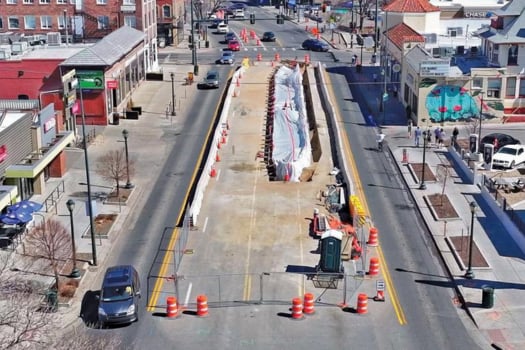
East Colfax gives us a very different picture because the finished benefit hasn't arrived yet.
The East Colfax Bus Rapid Transit project will connect downtown Denver with Aurora through dedicated bus lanes and other corridor improvements. RTD currently expects full BRT service to begin in 2028. The section between Broadway and Colorado Boulevard is scheduled to reopen in fall 2026 as construction progresses.
Once completed, the project is intended to improve transit service along one of the region's busiest corridors.
Right now, though, nearby residents are still dealing with construction.
That distinction matters when you're evaluating a home near the project.
Someone buying in the area today isn't buying next to the finished BRT system. They're buying next to a corridor that is still being rebuilt.
Research on transportation investments has found that housing markets can respond to planned infrastructure before construction is finished. Research on bus rapid transit has also found price effects associated with BRT, although results vary by project and location.
I wouldn't take that research and turn it into a prediction that a particular East Colfax home will appreciate by a specific percentage.
There isn't a reliable formula for that.
Instead, look at the buyer's timeframe.
Someone planning to own the property for ten years may be comfortable living through construction. A homeowner expecting to sell in two years has a very different calculation.
The future benefit and the current inconvenience have to be considered separately.
Sterling Ranch Is Still Growing
Sterling Ranch gives us another version of the same issue.
Instead of adding one major transportation project to an established neighborhood, the community itself is being built over time.
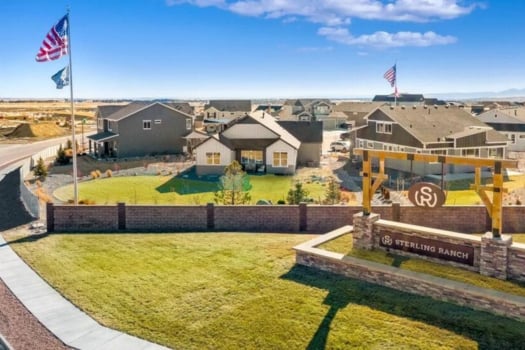
The master-planned community covers roughly 3,400 acres in Douglas County and is planned for approximately 12,000 homes across nine villages. A substantial portion of the community is also planned for parks, trails and open space.
People already live there. Finished homes, trails, parks and community amenities are in place.
More development is still coming.
That means buyers have to separate what they can use today from what they are expecting to use later.
A future retail center isn't the same as a grocery store that's already open.
A planned trail connection isn't the same as a completed trail.
A proposed amenity isn't the same as an operating one.
Sterling Ranch also has the planned Zebulon Regional Sports Complex. Douglas County's current plans call for construction of the sports facilities to begin in 2027, with indoor and outdoor facilities planned for the site.
It could become an important amenity for the community.
For someone buying today, though, it shouldn't be treated as though the completed facility is already part of the neighborhood.
You're buying at an earlier point in the development timeline.
The Stage of the Project Matters
Put Union Station, East Colfax and Sterling Ranch next to each other and the difference becomes easier to see.
Union Station: the major redevelopment is finished, and surrounding investment has had years to develop.
East Colfax: construction is still underway, and nearby homeowners are waiting for the completed transportation system.
Sterling Ranch: residents already have a functioning community, while additional homes and amenities continue to be built.
Those situations shouldn't be evaluated using the same assumptions.
A project announcement tells you what someone intends to build.
Construction tells you what residents are dealing with now.
Completion tells you what has actually been delivered.
The years afterward tell you whether additional housing, businesses and services develop around the investment.
That last stage matters because infrastructure doesn't operate by itself.
Improved transportation can make an area easier to reach. A new sports complex can give residents another destination. A redeveloped station can attract restaurants, housing and offices.
The surrounding development is part of what determines how much the finished project changes the neighborhood.
What Buyers Should Look At
If you're considering a home near a major Denver development project, start with what exists today.
Look at the actual street.
How difficult is access during construction?
How much noise reaches the property?
What does traffic look like during your normal commute?
Where are the grocery stores, restaurants, parks and other services you would actually use?
Then look at the project itself.
What has been approved?
What has been funded?
What is under construction?
What has a scheduled completion date?
What is still proposed?
Those stages aren't interchangeable.
I've seen buyers get excited about future amenities without separating the neighborhood they're buying today from the neighborhood they expect to have several years from now.
Buying early isn't necessarily a bad decision.
The price just needs to make sense for the property as it exists today. Future development should be treated as potential upside, rather than something that has already been delivered.
Sellers Have Another Problem: New Construction
The same development timeline can create a very different challenge for sellers.
A buyer comparing a resale home with new construction isn't only comparing kitchens, yards and finishes.
They're comparing financing, too.
Builders can sometimes offer lower mortgage rates, closing-cost assistance or other incentives that individual homeowners can't match.
I've seen this firsthand with a resale home in a new-construction community.
Nearby builders were offering financing incentives that created a much lower monthly payment for buyers. The property had already spent roughly 100 days on the market with another agent and then another roughly 90 days with me before the sellers eventually withdrew it.
That experience changed how I look at resale homes inside active new-construction communities.
The competition isn't always another resale property.
Sometimes you're competing with the builder's financing.
A resale home can be priced reasonably based on recent comparable sales and still struggle if a buyer can purchase a new home nearby with a financing incentive that changes the monthly payment.
That's why I would look at current builder inventory and incentives just as closely as recent resale transactions.
Development Can Take Years to Show Up in a Home's Value
A major project can improve an area without immediately increasing the value of every nearby home.
Union Station took years before the finished redevelopment became the neighborhood people know today.
East Colfax is still moving toward full BRT service in 2028.
Sterling Ranch continues to add homes and amenities as the community grows.
The project timeline needs to be compared with the homeowner's timeline.
Ten years of ownership gives you more time to wait for a project to mature.
Two years may not.
The project hasn't changed.
Your timeframe has.
Before You Buy or Sell Near a Major Denver Project
I wouldn't reduce the question to, "Will this project increase my home's value?"
I'd ask something more specific:
Where is the project today, and what does that stage mean for this particular property?
A home directly beside construction can experience the project differently from one several blocks away.
A resale home inside a new-construction community can face different competition from a similar home in an established neighborhood.
And someone planning to stay for ten years can make a very different decision from someone expecting to move in two.
Denver's development projects can bring better transportation, new amenities and additional investment. Those benefits just don't necessarily arrive when the announcement does.
For buyers and sellers, I think the more useful analysis is found in the gap between what exists today and what is expected to exist later.
That gap is where the project's timeline, the property's location and your own plans come together.